Brisbane sits on some of the most reactive clays in Australia, particularly the weathered Neranleigh-Fernvale beds and the alluvial sequences along the Brisbane River. These soils can change volume significantly with moisture — the same ground that cracks in a dry winter can swell and lift a slab in a wet summer. An expansive soil evaluation quantifies that shrink-swell potential using index tests like Atterberg limits and linear shrinkage, paired with classification of soils to confirm the dominant clay mineralogy. We run these tests under AS 1289 methods, giving builders and engineers a clear reactivity rating before any footing design begins.
Brisbane's reactive clays can lift a slab 40 mm in a wet season. Our evaluation classifies that risk before concrete is poured.
Scope of work
AS 2870-2011 is the governing standard for residential slabs and footings in Australia, and it classifies sites from A (non-reactive) to P (extreme reactivity) based on the characteristic surface movement (Ys). In Brisbane, vast areas fall into classes M, H, and E due to the high-plasticity clays derived from basalt and shale. Our evaluation follows this classification framework precisely. We measure:
Liquid limit, plastic limit, and plasticity index (AS 1289.3.1.1, AS 1289.3.2.1).
Linear shrinkage (AS 1289.3.4.1).
Suction change profiles using filter paper or oedometer methods (AS 1289.7.1.1).
These parameters feed into the Ys calculation, which determines the foundation design class. Without a proper evaluation, a house on Brisbane clay can suffer slab heave, cracked walls, and tilted floors within two to three seasonal cycles.
Technical reference image — Brisbane
Area-specific notes
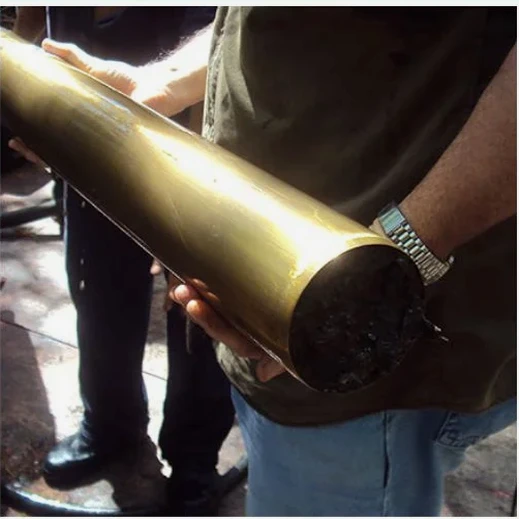
The biggest risk with Brisbane's expansive soils is underestimating the depth of the active zone. We have seen sites where the clay desiccation extends beyond 2.5 metres, yet standard auger holes only reach 1.8 metres. If you miss that deep dry clay and it rewets after construction, the heave force can exceed the slab's tensile capacity. Our sampling team uses push-tube samplers and thin-walled Shelby tubes to retrieve undisturbed cores from depth, so the lab tests reflect the real in-situ moisture and density. We also measure insitu suction with the filter paper method to map the active zone accurately.
Full index testing suite including Atterberg limits, linear shrinkage, and particle size distribution. We calculate Ys and assign the site class from A to P. This is the standard for residential and light commercial slabs in Brisbane.
02
Advanced Suction & Heave Assessment
For deep reactive profiles or high-risk projects, we add filter paper suction tests (AS 1289.7.1.1) and oedometer swell tests. The result is a site-specific heave prediction in mm, directly usable by structural engineers for footing reinforcement.
Standards used
AS 2870-2011, AS 1289.3.1.1, AS 1289.3.2.1, AS 1289.3.4.1, AS 1289.7.1.1
Frequently asked questions
What makes Brisbane's soil so reactive compared to other Australian cities?
Brisbane's geology is dominated by clay-rich materials from basalt weathering (the Brisbane Tuff and Neranleigh-Fernvale beds) and from the alluvial plains of the Brisbane River and creeks. These clays have plasticity indices often exceeding 40%, meaning they absorb and release more water than the sandy soils found in cities like Sydney or Perth. The subtropical climate also drives deep seasonal moisture changes, creating a thicker active zone.
How much does an expansive soil evaluation cost in Brisbane?
A standard AS 2870 reactivity classification with Atterberg limits and linear shrinkage on three to five samples typically ranges between AU$970 and AU$2.400. If advanced suction testing or oedometer swell tests are needed, the cost can go higher depending on the number of depths and the project complexity. We provide fixed-price quotes after reviewing the site plan.
Can I build a slab-on-ground on class E (extreme) soil?
Yes, but only with a stiffened raft slab designed per AS 2870 using the calculated Ys value. For class E, the slab typically needs deeper edge beams, additional reinforcement, and sometimes a moisture barrier membrane underneath. A proper expansive soil evaluation is mandatory to get the design parameters right — no engineer will certify a slab without it.
How deep do you sample for an expansive soil assessment?
We sample to at least 3 metres below the proposed foundation depth, or until we hit non-reactive material (bedrock or sand). In Brisbane's clay profiles, the active zone often extends 1.5 to 3 metres. We take disturbed and undisturbed samples at every 0.5 m interval in the top 2 m, then at 1 m intervals below that. The undisturbed samples go into the oedometer for swell testing.