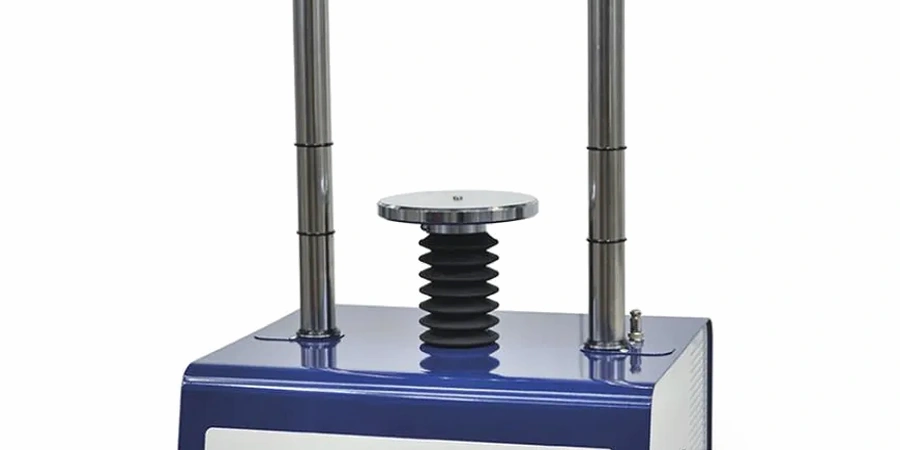
Laboratory testing forms the analytical backbone of geotechnical engineering in Brisbane, providing the quantitative data needed to move beyond visual classifications and into performance-based design. This category encompasses the full suite of controlled tests performed on soil, rock, and water samples recovered from boreholes, test pits, and surface collections across the greater Brisbane region. From basic index properties to advanced strength and consolidation assessments, laboratory services transform field observations into the parameters required for foundation design, slope stability analysis, retaining wall engineering, and pavement construction. In a city where the ground profile can shift from sound rock to deep alluvium within a single site, the role of the laboratory is not merely supportive but diagnostic, revealing the subtle characteristics that govern material behaviour under load.
Brisbane's geological setting amplifies the value of precise laboratory investigation. Much of the inner city and suburban fringe sits on deeply weathered profiles of the Neranleigh-Fernvale Beds and Bunya Phyllite, where the transition from residual soil to fresh rock can be gradual and deceptive. These residual soils often retain the fabric of their parent material while losing significant strength, making undisturbed sampling and careful residual soil characterization indispensable. The Brisbane River floodplain introduces sequences of soft estuarine clays and loose sands, materials whose consolidation and shear behaviour demand advanced testing to predict settlement and bearing capacity reliably. In the western corridors, expansive soils derived from weathered basalts present shrink-swell challenges that index testing alone often fails to quantify adequately.
Australian Standards govern virtually all laboratory procedures undertaken for geotechnical purposes in Brisbane, with AS 1289 forming the primary framework for soil testing methods. This series, published by Standards Australia, specifies everything from sample preparation and moisture content determination to complex triaxial and consolidation testing. NATA accreditation, administered by the National Association of Testing Authorities, provides the quality assurance overlay, ensuring that laboratories maintain calibrated equipment, follow documented procedures, and participate in proficiency programs. For road and pavement projects, the relevant state transport authority specifications, typically aligned with Austroads guidelines, may impose additional testing requirements or modified procedures, particularly for laboratory CBR determinations used in pavement thickness design.
The types of projects in Brisbane that depend on laboratory data span the full construction spectrum. High-rise developments on the CBD fringe, where basement excavations extend into weathered rock, require triaxial test programs to define effective stress strength parameters for excavation support design. Infrastructure corridors crossing the floodplain rely on consolidation testing to estimate long-term settlement beneath bridge abutments and approach embankments. Residential subdivisions on sloping terrain in areas like The Gap or Kenmore need shear strength data from soil mechanics study programs to assess cut and fill stability. Even smaller-scale works, such as retaining walls and stormwater detention basins, benefit from grain size analysis to confirm drainage characteristics and filter compatibility. In every case, the laboratory provides the numerical foundation upon which safe and economical designs are built, reducing uncertainty and protecting the long-term performance of Brisbane's built environment.
Turnaround varies by test type and laboratory workload. Basic index tests such as moisture content and Atterberg limits may be reported within 3 to 5 working days. Standard compaction and CBR tests often require 5 to 7 days due to curing periods. Advanced tests including triaxial and consolidation can take 2 to 4 weeks, particularly when multi-stage loading or pore pressure dissipation monitoring is specified. Urgent turnaround is generally available by arrangement.
Sample preparation follows AS 1289.1, which specifies procedures for drying, splitting, and conditioning specimens. Disturbed samples are typically air-dried or oven-dried at temperatures not exceeding 50°C for most tests, then riffled or quartered to obtain representative sub-samples. Undisturbed tube samples are extruded carefully in a controlled environment, trimmed by hand, and stored at high humidity to preserve natural moisture content until testing commences.
Laboratories should hold NATA accreditation to ISO/IEC 17025 for the specific test methods being requested. This accreditation confirms that the facility has been independently assessed for technical competence, equipment calibration, and quality management. Most Brisbane councils and state government agencies require NATA-endorsed reports for compliance submissions. The scope of accreditation should be verified against the project's required test methods before engaging a laboratory.
Yes, a combination of index tests and specialized assessments identifies expansive behaviour. Atterberg limits, linear shrinkage, and particle size distribution provide initial screening. The shrink-swell index, determined through core shrinkage tests or loaded swell tests under AS 1289.7.1.1, quantifies the soil's volume change potential. These results feed directly into site classification according to AS 2870, the residential slab and footing standard critical for construction in suburbs such as Kenmore and Brookfield.