← Home · Laboratory

Triaxial Test in Brisbane – Reliable Shear Strength Analysis for Urban Geotechnics

Together, we solve the challenges of tomorrow.

DISCOVER →

Brisbane sits on a complex mix of sedimentary rocks, residual soils and alluvial deposits from the Brisbane River floodplain. With more than 2.5 million residents and a skyline that keeps growing, the city demands solid geotechnical data for every new tower and transport corridor. The triaxial test is the standard method to determine shear strength parameters and stress-strain response of soil specimens under controlled drainage conditions. We run consolidated-drained (CD), consolidated-undrained (CU) and unconsolidated-undrained (UU) procedures depending on the project drainage scenario. For high-rise foundations in the CBD we often pair these results with a penetrometer test to cross-check stiffness in stiff clays, while on the riverfront we combine triaxial data with consolidation settlement analysis to predict long-term deformation under fill loads.
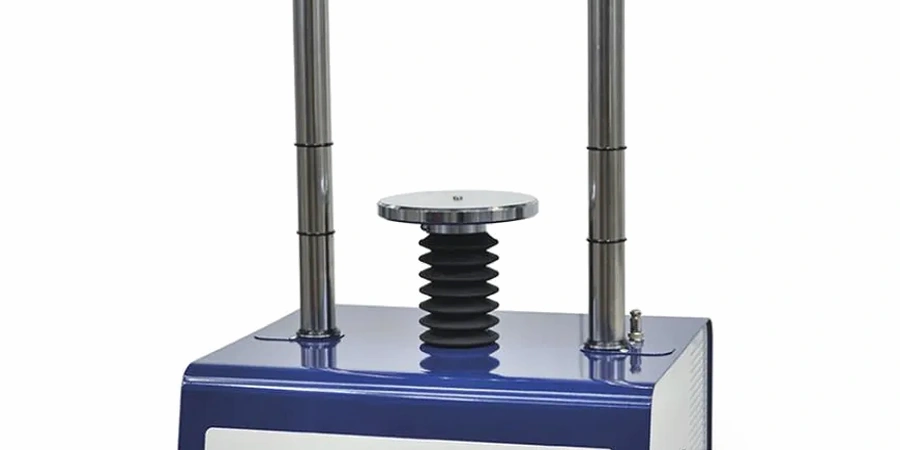
Illustrative image of Triaxial test in Brisbane
The triaxial test gives you the actual strength envelope of the ground, not a table value. That difference can save a pile cap redesign.

Scope of work

A typical job in Brisbane involves a 15-storey residential tower on the Kangaroo Point cliffs. The contractor needs to know the effective stress strength of the underlying Neranleigh-Fernvale beds. We take undisturbed tube samples from boreholes and set up three to four specimens at different confining pressures that match the expected overburden. The equipment applies a confining stress via water pressure in a triaxial cell while a vertical load ramps up at a controlled rate. Pore pressure transducers record the response during shearing. The output gives us cohesion (c') and friction angle (phi') for design. These values feed directly into slope stability models and bearing capacity checks. For embankments along the Gateway Motorway we cross-reference results with plate load testing to verify stiffness in compacted fills, and for excavations in the inner suburbs we use the same data to calibrate deformation monitoring plans.
Technical reference image — Brisbane

Area-specific notes

Brisbane's urban development has pushed construction onto marginal ground — old creek alignments filled in the 1970s, soft estuarine clays in the northern suburbs, and colluvial slopes in the western hills. A triaxial test run on intact samples from these deposits reveals whether the soil will lose strength under the added load from a new structure. In one case near Breakfast Creek, the design friction angle from triaxial data was 6 degrees lower than the assumed value, which forced a change from shallow footings to a piled raft. That kind of risk is invisible without a proper shear strength assessment.

Need a geotechnical assessment?

Reply within 24h.

Email: contact@geotechnicalengineering1.xyz

Typical values


ParameterTypical value
Specimen diameter50 mm or 100 mm (undisturbed)
Confining pressure range50 kPa to 1200 kPa
Drainage conditionsUU, CU with pore pressure, CD
Shear rate (CU)0.05 mm/min to 0.5 mm/min
Measured parametersc', phi', stiffness modulus E50
Standard referenceAS 1289.6.4.1, AS 1289

Linked services

01

Unconsolidated Undrained (UU) Triaxial

Rapid test on three specimens at different confining pressures. Used for total stress analysis in short-term stability problems like excavation support or embankment construction on saturated clays.

02

Consolidated Undrained (CU) with Pore Pressure

Specimen is consolidated under a confining stress before shearing without drainage. Pore pressure measured throughout. Provides effective stress parameters for long-term stability in clay fills and soft foundations.

03

Consolidated Drained (CD) Triaxial

Full drainage allowed during both consolidation and shearing. Slow shear rate ensures no excess pore pressure. Best for slow loading scenarios like embankment raising or dam construction.

Standards used


AS 1289.6.4.1 – Determination of compressive strength of soils, AS 1289 – Method for consolidated drained triaxial test, AS 1289.6.4.2 – Consolidated undrained triaxial test with pore pressure measurement

Frequently asked questions

What is the difference between CU and CD triaxial tests?

In a CU test the specimen is consolidated but sheared without drainage while pore pressure is measured. In a CD test drainage is allowed throughout shearing, so the load application is much slower. CU gives effective stress parameters faster and is more common in Brisbane projects where time is critical. CD is preferred for long-term drained loading scenarios such as embankments or retaining walls where full pore pressure dissipation is expected.

How long does a triaxial test take in your Brisbane laboratory?

A UU test typically takes 2 to 3 working days. CU tests require 5 to 10 days depending on the consolidation time of the soil. CD tests can take 14 to 21 days for low-permeability clays. We always discuss the schedule with the project engineer before starting so the program fits the construction timeline.

What sample quality is needed for a reliable triaxial test?

Undisturbed tube samples are essential. The tubes must be sealed, stored upright and transported without vibration. Disturbed or remoulded samples produce unreliable strength parameters. We recommend sampling from boreholes using thin-walled Shelby tubes with a diameter of at least 75 mm to minimise disturbance. Samples should be tested within two weeks of extraction.

Watch how it works

Location and service area


We serve projects across Brisbane.

Location and service area