Seismic engineering in Brisbane represents a critical yet often underestimated discipline within geotechnical and structural design. While Queensland is not traditionally associated with the high seismicity of tectonic plate boundaries, the region is subject to intraplate earthquakes that can cause significant damage to infrastructure not designed with adequate lateral resistance. This category encompasses the full spectrum of earthquake-resistant design, from site-specific ground motion hazard assessments to the detailed structural detailing required to ensure life safety and asset protection. For projects of a certain scale or occupancy, integrating seismic considerations early in the design phase is not merely prudent; it is a fundamental obligation under Australian law.
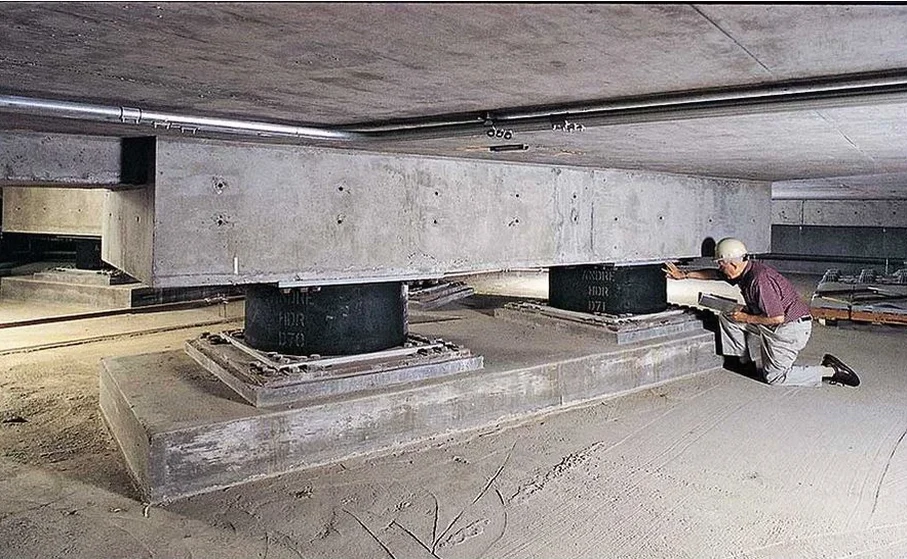
Brisbane's underlying geology plays a pivotal role in how seismic waves propagate and amplify. Much of the CBD and inner suburbs are founded on the Brisbane Tuff, a competent rock formation, but extensive areas along the Brisbane River and in reclaimed zones feature deep alluvial soils and estuarine clays. These soft soil profiles can dramatically amplify ground shaking through site period elongation and resonance effects, a phenomenon classified under AS 1170.4 as a Class Ee or De site. A rigorous geotechnical investigation is therefore the indispensable first step, quantifying the site's dynamic properties to avoid underestimating the seismic demand on a structure. For critical facilities, advanced techniques like base isolation seismic design are often investigated to decouple the structure from these amplified ground motions.
The governing regulatory framework is the National Construction Code (NCC) Volume One, which mandates compliance with AS 1170.4:2007 (R2018) – Structural design actions, Part 4: Earthquake actions in Australia. This standard maps the hazard factor (Z) for Brisbane, typically around 0.05 to 0.08 for a 500-year return period, placing it in a low-to-moderate hazard zone. However, the standard's mandatory requirements for ductility, structural redundancy, and detailing for specific building importance levels (from Level 1 for minor structures to Level 4 for post-disaster facilities) mean that even a low Z value triggers non-trivial design obligations. Seismic design in Brisbane is therefore driven by a performance-based philosophy, ensuring structures can withstand the ultimate limit state event without collapse.
The types of projects that demand dedicated seismic engineering services in Brisbane are diverse. High-rise residential and commercial towers with complex lateral load-resisting systems require dynamic analysis to verify inter-storey drift limits and component capacities. Essential infrastructure such as hospitals, emergency services headquarters, and power substations (Importance Level 4) must remain operational after a major earthquake, necessitating performance-based design and often sophisticated protective systems. Long-span bridges, liquid storage tanks susceptible to sloshing effects, and industrial facilities handling hazardous materials all require detailed seismic vulnerability assessments. Even heritage-listed masonry structures undergoing adaptive reuse need careful evaluation and retrofitting strategies to meet current life-safety standards without compromising their fabric.
Brisbane is classified as a low-to-moderate seismic hazard zone under AS 1170.4, with a hazard factor (Z) typically between 0.05 and 0.08. While not comparable to active plate boundaries, the National Construction Code mandates earthquake-resistant design for all structures of Importance Level 2 and above. Intraplate earthquakes, though infrequent, can occur and are capable of causing structural damage, particularly on soft soil sites that amplify ground motion.
Brisbane's geology varies from competent Brisbane Tuff rock to deep alluvial soils and estuarine clays along the river. Soft soils can amplify seismic shaking significantly through site period elongation and resonance. Under AS 1170.4, these sites often classify as Class De or Ee, requiring a site-specific geotechnical investigation to quantify dynamic properties and ensure the structural design accounts for the amplified spectral accelerations.
The primary standard is AS 1170.4:2007 (R2018) 'Structural design actions – Earthquake actions in Australia,' called up by the National Construction Code. It defines the hazard factor for Brisbane, sets out methods for calculating design base shear, and specifies detailing requirements for ductility and structural integrity based on the building's importance level, from residential dwellings to post-disaster emergency facilities.
A dynamic analysis, such as a modal response spectrum analysis, is typically required when a structure is irregular in plan or elevation, exceeds certain height limits, or has a fundamental period that makes the equivalent static force method inaccurate. High-rise towers, buildings with soft storeys, or structures incorporating advanced protective systems like base isolation generally demand a detailed three-dimensional dynamic analysis to verify performance.