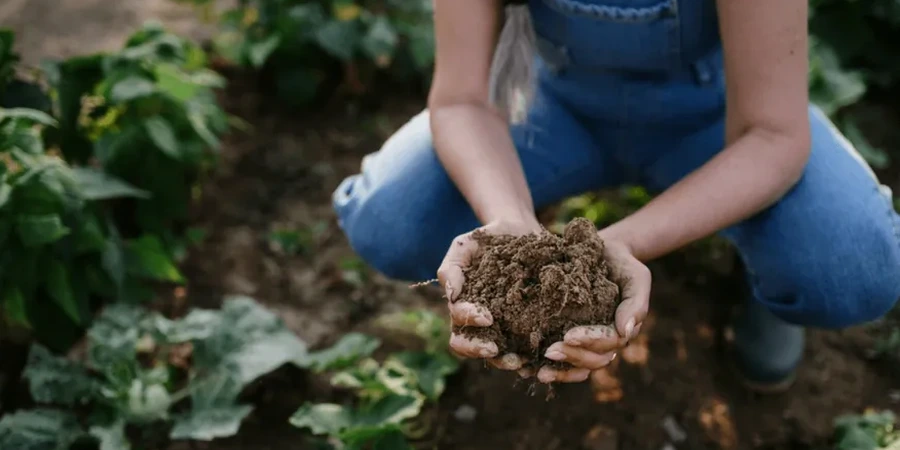
In Brisbane, we frequently encounter compressible organic layers — particularly peat and soft alluvial clays — beneath the city’s newer residential and commercial developments. These deposits, often 2 to 5 m thick along the Brisbane River floodplain, require careful handling because they can cause long-term differential settlement if left untreated. Our team combines field sampling with laboratory testing to quantify organic content and decomposition state, ensuring that the chosen treatment method — whether it's removal, preloading, or soil mixing — targets the actual risk. Before any large-scale organic soil management program, we always recommend a detailed test pit investigation to map the lateral extent of these problem layers.
Organic soils in Brisbane can lose up to 30% of their volume under load if left untreated — early identification is the only way to avoid million-dollar remediation later.
Scope of work
Brisbane's alluvial terraces contain organic soils with moisture contents often exceeding 150%, a factor that directly influences their high compressibility. We routinely measure loss on ignition (LOI) per AS 1289.4.1.1 to confirm organic content, then correlate results with consolidation tests to predict creep rates. For sites where organic layers are thick but discontinuous, we combine that data with CPT soundings to generate rapid vertical profiles of tip resistance and sleeve friction — crucial for deciding between full removal and in situ stabilization. Key parameters we evaluate include:
Organic content (LOI) — typically 15-70% in Brisbane's low-lying suburbs
Natural moisture content — often above liquid limit
Undrained shear strength from vane shear tests
Compression index (Cc) from oedometer tests
Decomposition state (fibric, hemic, sapric)
Technical reference image — Brisbane
Area-specific notes
A three-story commercial building in Murarrie taught us a hard lesson about Brisbane's organic soils. The geotechnical report had flagged peat up to 4 m deep, but the builder opted for a shallow footing design without preloading. Within two years, differential settlements reached 120 mm — doors jammed, floor slabs cracked, and the stormwater line broke. The fix required underpinning with driven piles through the organic layer, a cost that dwarfed the original soil management budget. That project is why we push for early-stage settlement analysis and controlled preloading before any footing is cast.
Test pits, hand augers, and CPT to delineate organic layer thickness and lateral variability across your lot.
02
Laboratory Characterization
LOI, moisture content, Atterberg limits, and consolidation tests to quantify compressibility and decomposition state.
03
Treatment Design
Recommendations for removal, preloading with vertical drains, or deep soil mixing — backed by settlement calculations.
04
Construction Monitoring
Settlement plates, piezometers, and inclinometers to verify that treatment achieves the predicted performance.
Standards used
AS 1289.4.1.1 – Loss on ignition test, AS 1289.6.2.2 – Consolidation test, AS 1726 – Geotechnical site investigations
Frequently asked questions
What is the typical depth of organic soil in Brisbane?
Along the Brisbane River corridor and around Moreton Bay, organic deposits range from 1.5 to 6 m thick. The deepest layers are often found in former wetlands like those at Eagle Farm and Hemmant.
How is organic soil management different from standard earthworks?
Standard earthworks focuses on compaction and bearing capacity. Organic soil management addresses long-term compression, creep, and decomposition — so we use consolidation tests, vane shear, and settlement modeling rather than just Proctor or CBR.
What treatment options work best for Brisbane's peat soils?
For shallow peat (<2 m), full removal and replacement with engineered fill is common. For deeper layers, preloading with vertical drains or deep soil mixing with cement binders has proven effective across multiple local projects.
How much does organic soil management cost per square meter?
Costs range from AU$1.170 to AU$3.380 depending on treatment depth, access, and disposal requirements. A detailed site investigation is the first step to get an accurate quote for your specific lot.